A Conversation with Beth Sherman
Full of color and life and sound, Beth Sherman’s flash fiction marks here as a double #DIHPAlum. We chat here about the beauty of eavesdropping, the sticky subject of social media, and how life itself is a toolbox for our writing lives. Enjoy two flash stories from the book, below the jump. — CMG
~
1. Our traditional opening gambit: What is your favorite pocket?
The outside pocket of my Vera Bradley tote bag, which is roomy enough for my phone, my car keys, tissues, several pens, and a small notebook I take everywhere because you never know when you might overhear someone saying something interesting and need to write it down.
2. What is the strangest place you’ve ever given a reading?
When I was writing my Jersey Shore Mystery novels, I had a reading at the Ocean Grove, NJ video store. I’d be reading and people would walk in and want to rent videotapes. Remember them?
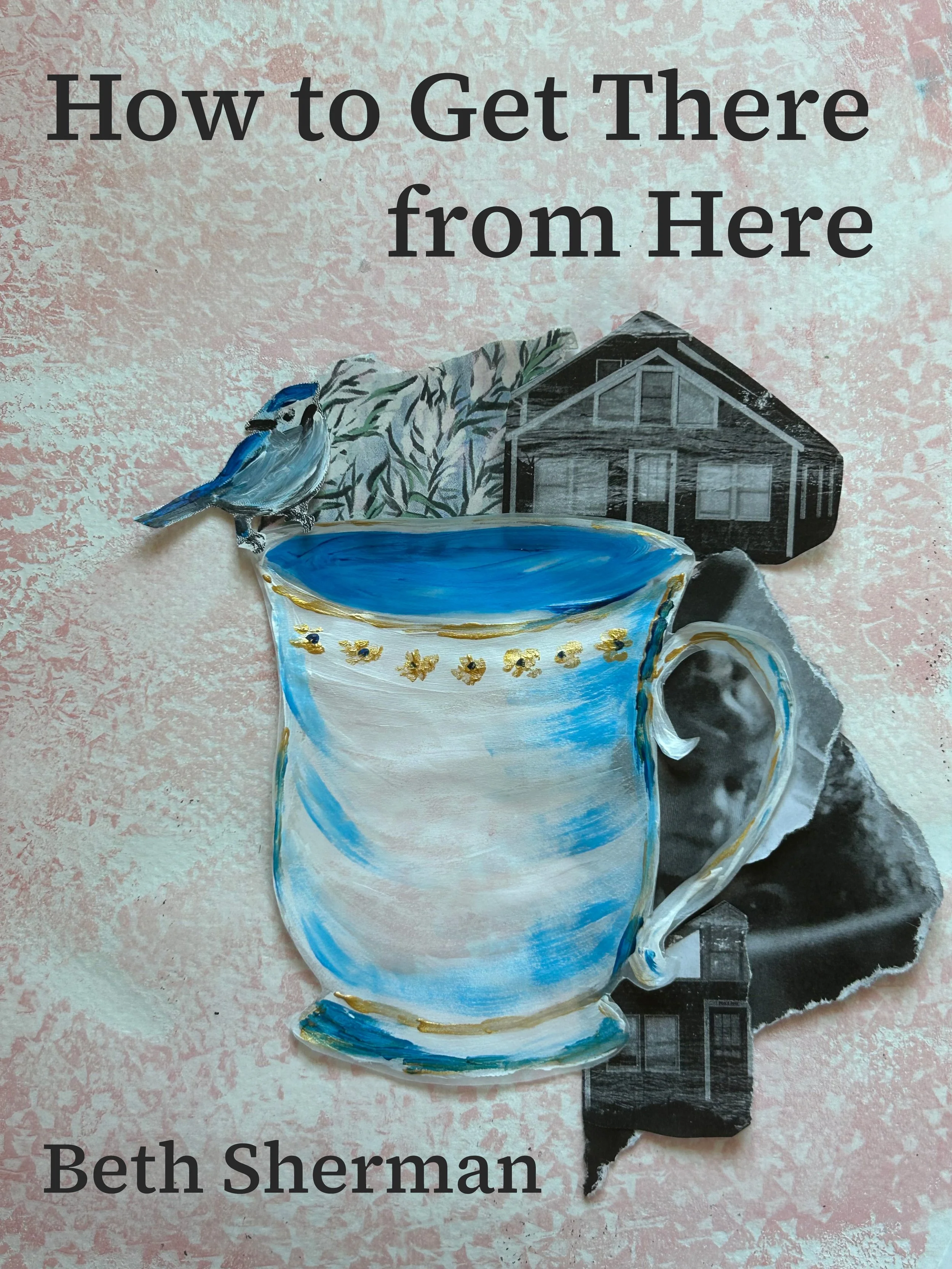
3. Can you tell us about the title of your new collection? How did you land on that and what is the story underneath?
In the first chapter of my novella-in-flash, 71-year-old Sylvia Goodman disappears. Her daughter, Lauren, begins a frantic search and immediately thinks of combing the beaches, because they’re Sylvia’s favorite place to be. Sylvia has dementia and Lauren realizes Sylvia doesn’t know “How to Get There from Here,” which became my title. I like it because it works on two levels – literal and metaphorical. The story that follows explores their struggle to come to terms with a relentless, life altering disease.
4. What are your thoughts on the role of social media for poets/writers/literature in general? Are these platforms an efficient way to disseminate work or a floodgate of noise or perhaps both?
I think social media is great. I stayed on X when many people left and I’m glad I did. It keeps me updated on who’s publishing where, who’s winning contests, who’s getting book deals, etc. I’m on Bluesky and Instagram, too. Insta is great for learning about which journals are open. And yes, I like posting my work. It’s thrilling when someone I’ve never met says how much they liked something I’ve written.
5. If you were talking with a new writer, what might you tell them about the creation and maintenance of their writing community?
First off, I’d tell them to find a writing community. I live on Long Island, not far from New York City, but I was never able to join an in-person writing group. In 2023, I joined Smokelong Fitness, an absolute game changer for me. The tasks! The prompts! The webinars! It’s priceless to have knowledgeable, caring writers comment on my drafts. I’ve met so many wonderful people. So, I highly recommend joining some kind of ongoing group where you can interact with other writers and hopefully become better at the craft of writing.
6. How do literary magazines support your goals as a writer?
Like many writers, I have dream journals. Smokelong was one. As was Flash Frog, Milk Candy Review, Bending Genres, Fictive Dream, and of course, Does it Have Pockets. I try to read as widely as I can. I love when journals have calls for a specific theme because it provides instant inspiration, not to mention a deadline.
7. What would you do differently when you write your next book?
I think I would try to stress a little less about getting it published. Whether you’re writing a chapbook, a story collection, or a novella-in-flash, you usually have to win a contest and the odds seem daunting. But it’s basically out of your control. Best to focus on the process and not the end result.
8. What hobbies/activities/experiences fill your cup of words?
I’m a born snoop so I’m constantly on the lookout for things that can serve as fodder for my stories. They pop up unexpectedly. For instance, a store near me advertised a Sloth Experience and that became a short story. Or something terrible will happen in the news. A drunk man barreled into a nail salon not far from my house, killing five people inside and I wrote a triptych about it. I feel like I move through the world like one of those giant claws in an arcade, always trying to scoop up ideas!
9. What question do you wish we would have asked?
What’s the most important thing to keep in mind when writing a novella-in-flash?
I think the writer always has to be asking themselves: what is the reader reading to find out? What questions are being raised? Will they be answered? What keeps the reader’s interest, so they want to keep turning pages? If the answer is “I don’t know,” that’s not good!
10. How can readers find more of your work and where is the best place to order your new book?
My website: https://www.bethsherman.site/
Get the new book from Ad Hoc Fiction: https://www.adhocfiction.com/2026/06/how-to-get-there-from-here-beth-sherman/
Don’t miss two gorgeous flashes from How to Get There from Here
Bluebird
The key fits. And the car shakes rumbles trembles. Like a magic trick. Like a promise. Seat. Steering wheel. Belt. D. N. R. Hmmm. A multiple-choice test. N stands for nothing. Pick again. R and the car slides down the driveway into morning. You can’t keep going backwards. What does D stand for? Donuts deep dart dandelions. Blow on the fluff, make a wish.
D is the last one left and when you press it, the car pitches forward. You’re moving! Out the window, houses swoosh by. You can move fast faster without Lauren and her no don’t can’t musn’t. You know how to do this. You learned at sixteen. Your mother taught you in the parking lot behind the cleaners. Mr. Krupnik was his name. An oily little man with bushy eyebrows. A jar of lollipops on the counter. He knew what flavor you liked. All these years later, you can taste the tart purple, like licking a balloon grape.
A horn blares behind you and you press the floor petal. Petal? Pedal. The car does what you tell it to do. Good car. Thank God you’re wearing shoes. When other cars stop, you stop. When they go, you go. Easy-peasy. Lawns roofs trees flowers pretty houses shops sidewalks people streetlights till at last there’s the highway. Faster, fastest.
You know where you’re going. It’s getting there that’s tricky. Learning is a journey, you say to your students. Their hopeful faces tipped toward you like thirsty flowers. Long day’s journey into night. Journey back to where you belong.
You tell your students, pay attention. You never know what you’ll find.
Out the car window, other cars, trucks, big green signs. One of them will point the way home. You put the thing-y down so the sun doesn’t blind you.
The sky is a bluebird laughing.
All Toads Are Frogs
But not all frogs are toads, my mother tells me.
We’re in the day room, next to the terrarium.
Today is a Blue Sky Day. She painted flowers by numbers, listened to a story, ate her lunch.
There are other women in the day room, some in wheelchairs, most staring at nothing, like they’re watching invisible TV. Nurses cycle in and out.
Look, my mother says, pointing to the tank.
Two frogs. One drinks from a tiny swimming pool. The other sits in a rope hammock. There are artificial climbing vines, a mossy basking area, a hidden cave, even a lounge chair with a teeny cup holder. Their habitat looks nicer than my mother’s room, which she shares with Eleanor Klein, who doesn’t recognize her husband when he visits.
One of the nurses has given my mother a sheet of paper with Fun Amphibian Facts.
They shed their skin and eat it, I read.
They have teeth.
They can live 20 years, longer in the woods.
My mother reaches over and removes the lid, sticks her hand inside.
Don’t, I say, thinking about salmonella, hundreds of invisible, dangerous bacteria.
But she’s already removed a pale green frog with yellow eyes and gold spots on its back. It fits in the palm of her hand like a charm.
I look around. No nurses. No one is paying attention to us.
She’s brought the frog up to her lips. I’m horrified she might kiss it, but instead she starts whispering in its ear.
Mom. Don’t. Stop, she says to the frog.
Words I’ve been repeating for the past year.
The frog looks bored, though maybe that’s his resting face.
They can scream, my mother says.
And I imagine what that sounds like – the high-pitched wail of the lost.
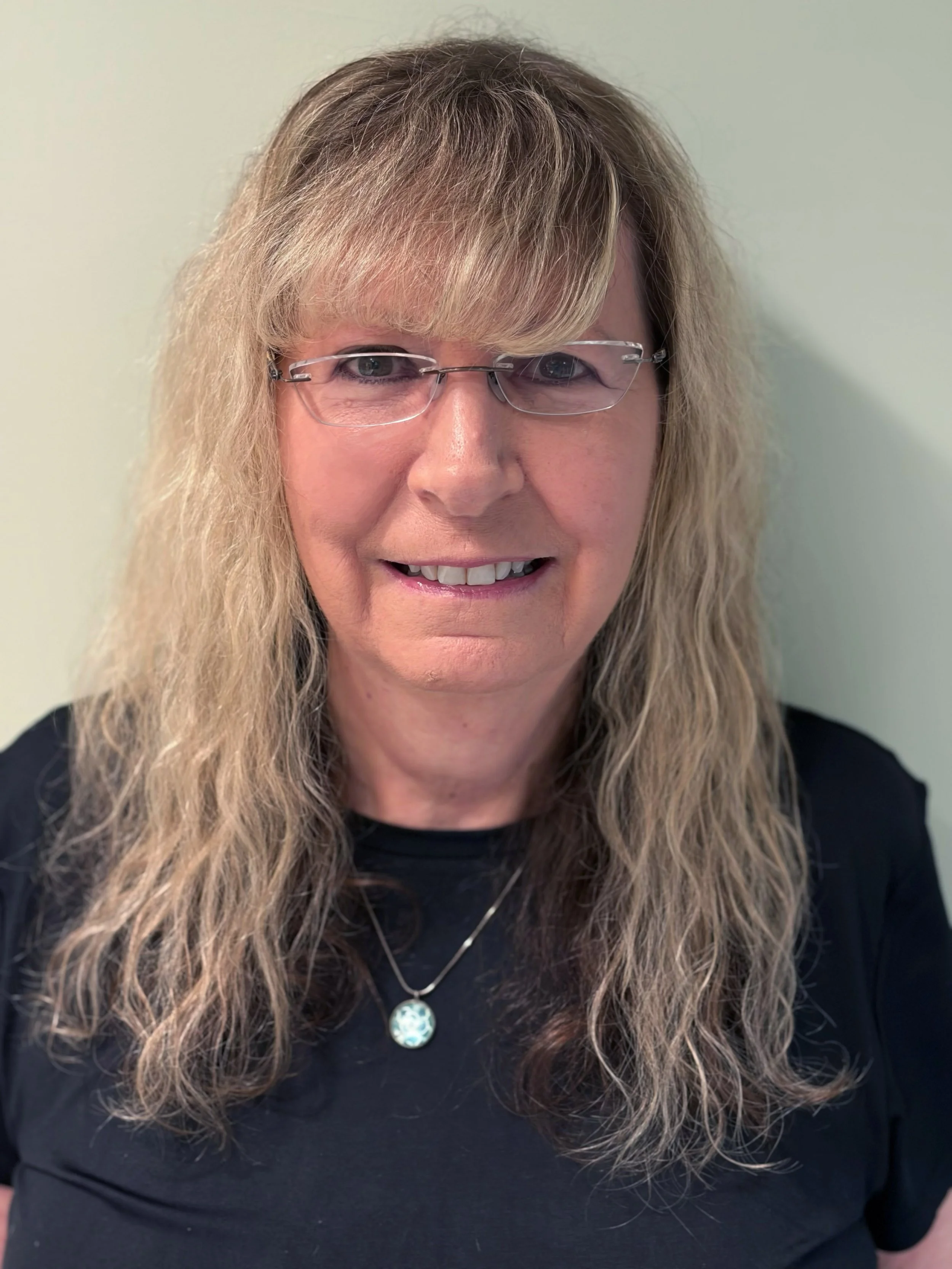
Beth Sherman is the author of the novella-in-flash, HOW TO GET THERE FROM HERE (Ad Hoc Fiction). She has had more than 250 stories featured in literary journals, including Ghost Parachute, Fictive Dream, Bending Genres and Smokelong Quarterly, where she’s a Submissions Editor. Her work appears in Best Microfiction 2024 and 2026 and Best Small Fictions 2025. The author of five mystery novels, she can be reached on social media @bsherm36.
(Photo by Jessie Edelstein)