A Conversation with Liz deBeer
The warm, witty, and wonderful Liz deBeer, DIHP Alum, released her newest chapbook, Farewell to Emptiness, with 30West Publishing in April. We couldn’t wait to dig into her rich, layered stories and she graciously agreed to answer our semi-famous “Pocket Interview!” Though she’s never given a reading in a strange place, read on for Liz’s thoughts on social media, supporting other writers, and the continued search for beauty in nature and beyond. Don’t miss the title story below the jump. — CMG
~
1. Our traditional opening gambit: What is your favorite pocket?
Pockets in yoga pants. I like having a place to put a tissue, especially during allergy season.
2. What is the strangest place you’ve ever given a reading?
I haven't done any readings in strange places, but I'm open to suggestions!
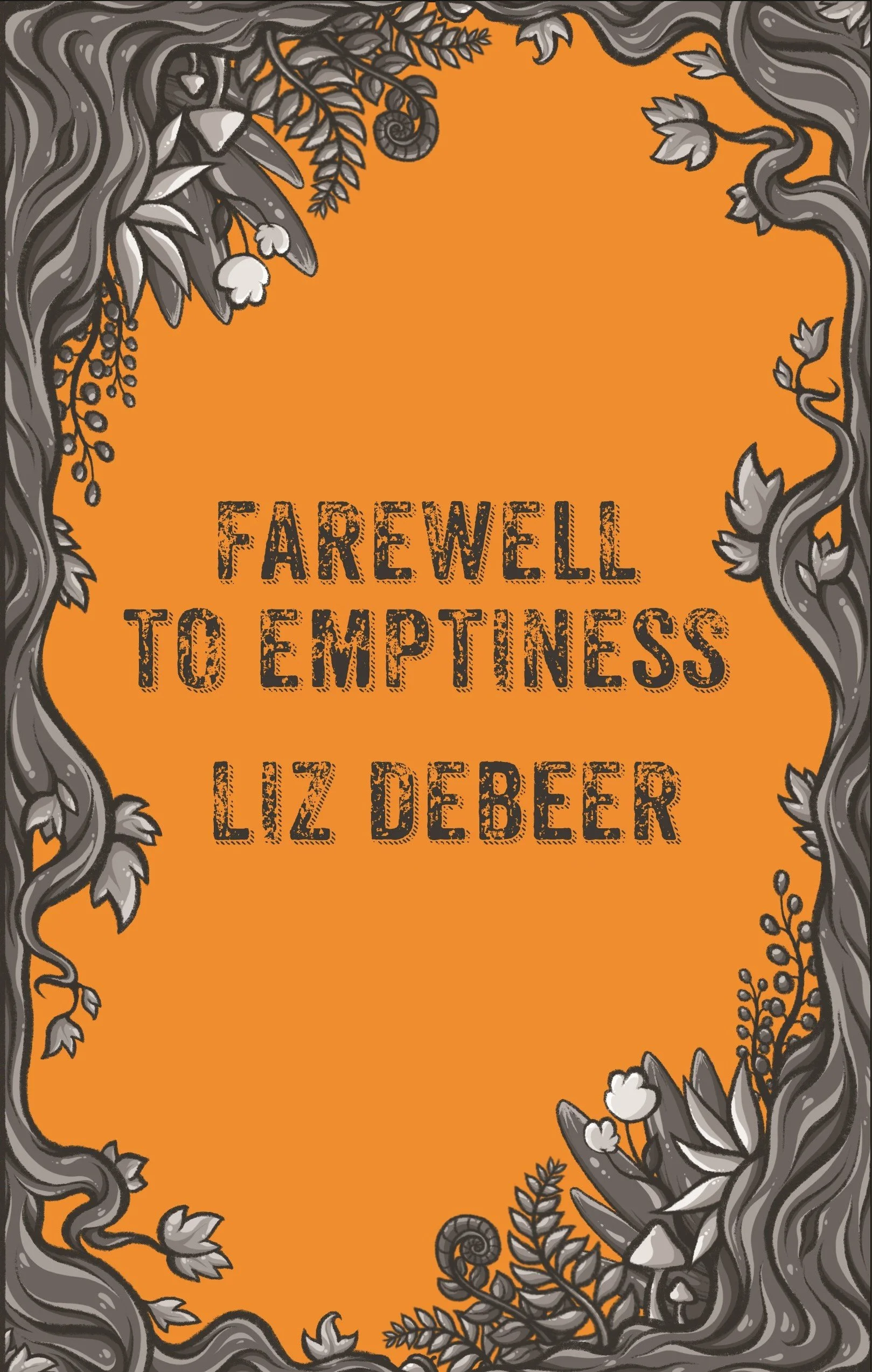
3. Can you tell us about the title of your new collection? How did you land on that and what is the story underneath?
The title “Farewell to Emptiness” is shared with a story in the collection and meant to reflect both an abandoned slaughterhouse central to the setting, as well as the main character’s feelings about coping with her dysfunctional family.
4. What are your thoughts on the role of social media for poets/writers/literature in general? Are these platforms an efficient way to disseminate work or a floodgate of noise or perhaps both?
Social media is exhausting. So unreliable! But it’s also fabulous to share and celebrate creatives’ work.
5. If you were talking with a new writer, what might you tell them about the creation and maintenance of their writing community?
Writing communities are invaluable! I’m fortunate to be active in two. One is an online writing group run by Flash Fiction Magazine’s Author’s Only Collective; writers all over the world participate, some widely published and some novices. The group provides prompts, peer-editing, plus workshops, all virtual.
My second writing community, Project Write Now, offers both in-person and virtual events and classes. Many participants attend multiple classes together over the years, forming tight bonds. (I both teach and take classes there).
Such writing communities offer encouragement during dry spells when rejections pile up and support when work gets published. I’ve learned so much from members in both groups.
6. How do literary magazines support your goals as a writer?
I started writing and submitting flash fiction after I retired from teaching public high school, and feedback from established, respected editors helped me improve my craft. Several editors, including Laura from Fictive Dream who published the title story “Farewell to Emptiness,” and Cami from DIHP offered encouragement when my earlier submissions were declined.
Once my chapbook was published, several literary magazine editors reposted my announcements and even provided book blurbs and reviews, like Court Harler from Flash the Court, Kristy Anne Richards from Red Rose Thorn, DE Hardy from Claudine, and, of course, the chapbook publisher Josh Dale, who is also editor of AfterImages. I’m so grateful for these and other literary editors for their support!
7. What would you do differently when you write your next book?
I love chapbooks; they’re accessible both in size and price. But I’d like my next book to be longer with an ISBN, so it could be sold in bookstores.
8. What hobbies/activities/experiences fill your cup of words?
Many of my stories (including fiction) are based on challenging or disturbing memories, like the chapbook’s opening scene where a client fondles the narrator, a waitress. That is a modified version of an experience I had as a waitress while in college.
I often use images I see on outdoor walks to suggest the healing power of nature. Observing the ocean (just a few miles from my New Jersey home) reminds me that while the sun rises and sets daily, conditions constantly change. I strive to be resilient, searching for beauty even on overcast days.
9. What question do you wish we would have asked?
What prompted you to write this chapbook?
I grew up in the Albany, NY, area, where a slaughterhouse and meat packing plant employed many people, including some friends’ fathers. I read years later in a local newspaper that when the abandoned building was finally going to be demolished, some teens broke in, discovering piles of rotting toys among other things. That image of decaying toys sparked me to conjure up characters, created from bits of people I knew, including myself, to write flash stories “Farewell to Emptiness” and “Trespassing.” I felt the characters Lu and AJ could carry a fuller arc beyond these two stories, which resulted in this novelette-in-flash.
10. How can readers find more of your work and where is the best place to order your new book?
My website has regular updates about my latest work: www.ldebeerwriter.com
To order the chapbook, please go to : https://www.thirtywestph.com/shop/p/farewelltoemptiness
Farewell to Emptiness
A pair of plump pigeons strut across cracked cement, their blue-gray heads jerking, while I peer through a chain link fence surrounding the abandoned building where Daddy and AJ’s father worked as meat packers. Demolition begins tomorrow morning, and I’m here to say a farewell-fuck-you to my memories.
When the slaughterhouse first closed, AJ and I’d visited the building together, drunk on Pabst Blue Ribbons I’d snagged from Daddy’s stash. AJ’s hands shook while he sprayed curse words on the exterior. His family moved south a few weeks later, following the plant’s path, but AJ’s faded words remain, like a jagged patch sewn on raggedy jeans.
A pigeon interrupts my thoughts, waddling closer, cocking its head, wondering if I’ve got food. I take a slug from my beer, then pull out a half-eaten bag of potato chips and toss one to the gray bird who pecks at it as his friend rushes over. Flinging them more chips, I remember AJ’s dad, who’d bring home Acme-brand snacks plus packets of red Kool-Aid to tide the kids over ’til dinner.
My father was different. We knew he was home when the front door slammed and a psssst released from his Pabst. He’d sink into his worn Lazy Boy, complaining between beer burps about the assembly line and his shitty shift which started at 6 am. He’d fall asleep watching local news, an empty beer bottle balanced on his belly, snores shaking the sheetrock and scaring the cat.
Once Daddy’d brought home a pig’s heart for me to share with my high school biology class. The other kids shot darts with their eyes, as if Daddy were a murderer and they themselves didn’t eat bacon and ribs. Not AJ, of course, but he just looked straight ahead, ignoring everyone, including me.
After the meat-packing plant closed, and AJ‘s family migrated south, Daddy got fired from K-Mart, A&P, Wilson’s Meat Shoppe, and a truck driving gig, finally staying home and evolving into a rotten potato, soft with age spots and tubulars, guzzling forties all day until his heart officially stopped. At his memorial, none of us could remember the last time he’d laughed or cried or said more than grab me the channel clicker or a Pabst.
Finishing off my beer, I consider slinging the bottle at the building, imagining it smashing into fragments. But I hold back, like I always do, wishing I’d been AJ, who left this crap behind. Or one of these pigeons, cooing by the abandoned building, disregarding its empty inside, then flying away to anywhere else.
This piece was first published at Fictive Dream, May 2025, reprinted with our gratitude.
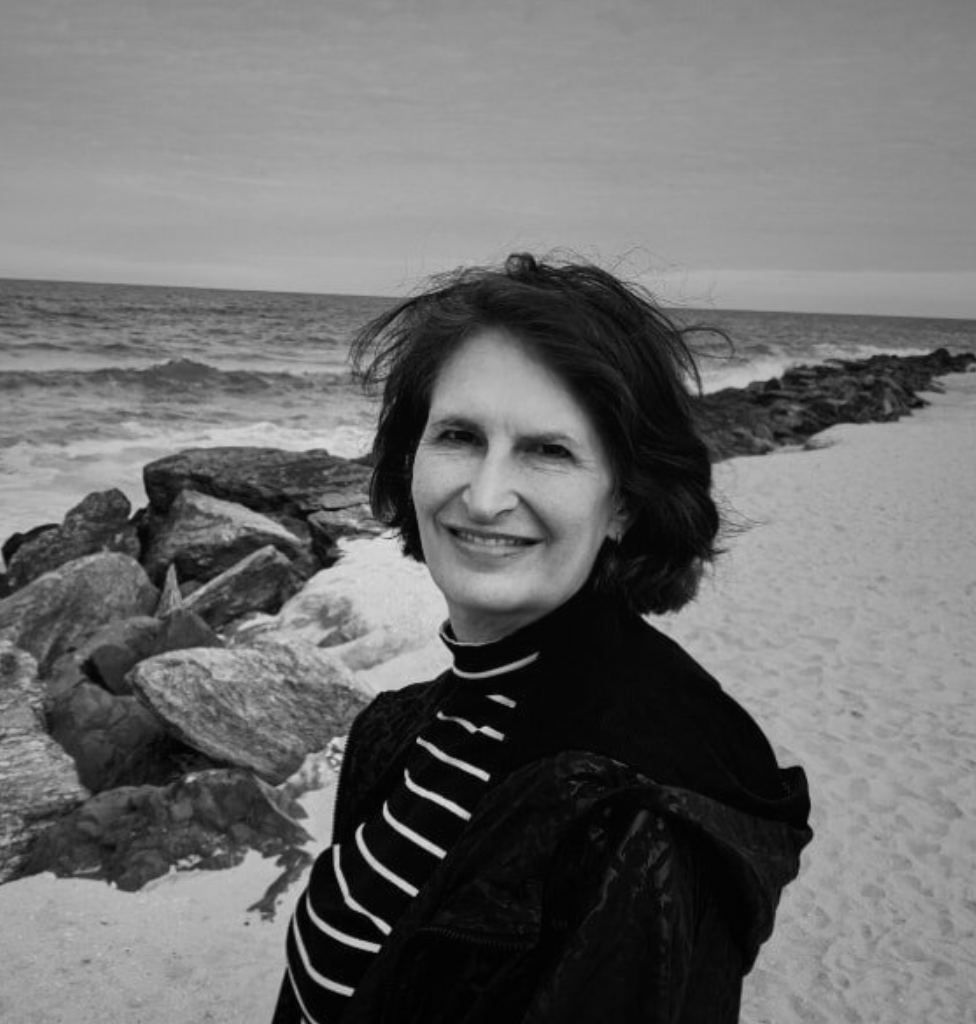
Liz deBeer is the author of Farewell to Emptiness, a novelette-in-flash (Thirty West). Her flash has appeared in BULL, Fictive Dream, Bending Genres, DIHP, and others. A volunteer reader for Flash Fiction Magazine, Liz is a teacher and writer with Project Write Now. Substack: A Lizard's Tale. Website: http://www.ldebeerwriter.com