A Conversation with Eileen Toomey
I’ve been sharing Eileen Toomey’s wonderful “How to Make an Espresso Martini” creative nonfiction, which first appeared here at DIHP, for over a year, and it has become a signature guide for me, my sister-in-law, and her best friend. With Eileen’s guidance, we count our beans and consider meaning. There’s layers of light upon layers of dark throughout Eileen’s rich, balanced work, just like in this delightful conversation. — CMG
~
1. Our traditional opening gambit: What is your favorite pocket?
I love a good pocket on a button-down shirt for glasses, pens, and random scraps of paper. In-seam pockets, hidden along the side seams of a skirt or pair of pants, are roomy and perfectly placed. The wide back pockets of a pair of Levi's reveal my age. They make me think of Daisy Dukes, kissing in the backseat of a car, men's wallets, back-pocket combs, and those '70s ad campaigns. A kangaroo pocket in a favorite hoodie is handy until it sags when I put anything in it besides my hands, unlike the tidy inside pocket of my jean jacket where I (used to) hide my smokes. Front pockets are for shoving in fists, wads of cash, chewing gum, paper clips — everything coming out mangled in the wash the next day. Coin pockets are silly but charming. Key pockets in gym shorts without real pockets are just dumb. I have loved cargo shorts and painter's pants with side pockets for phones, 5-in-1 tools, dog poop bags, baby bottles, and rulers. These days I'm grateful for the new pockets in workout leggings, wide enough for an iPhone — but where am I supposed to put my locker key?
2. What is the strangest place you’ve ever given a reading?
My first reading. It started with a handwritten flyer. I came to the gym a few days after my chapbook, How to Make an Espresso Martini was published by Bottlecap Press, feeling that combination of excitement and anxiety. A bunch of the girls had ordered the book immediately, going onto their phones after Michelle made an announcement at the beginning of class. I was gobsmacked at the generosity of the gesture, and if I didn’t realize this before, I now knew that I was surrounded by friends. Danna ran up to me with a stack of papers “Here! For our next Crunch Lunch! Hand them out!”
CRUNCH Lunch Survey
Please check all that are good for you. Return to Cindy, Jackie, Eileen or Danna.
Dates: __4/27 __4/28 __4/29
Places: __Panera, __Chipolte, __ Apple St. Kitchen
or
bring you soup/salad/sandwich to
__ Danna’s @123 Main Street, SmallTown, NJ
***Special Book Signing by Author Eileen Toomey
How to Make an Espresso Martini
available on Bottlecap Press. $10
Days before the luncheon, none of us — including me — had received our books, but Danna and I decided to keep the date. Fourteen women were showing up. Instead of just signing books while we ate, I made a poster and decided to read a few poems.
Jackie gave me exactly the advice I needed. "Don't think showoff," she said. "Think accomplishment."
On the way over, my plastic mousse cups tipped over on Harding Road. Then I walked straight into Danna's glass storm door. By the time I finally set up my giant tri-fold board with my new poster from Staples, her beautiful house was already filled with familiar cackles.
The women toasted me with my reconstructed espresso martini desserts (thanks Danna) while filming the reading on their phones. The day before, I'd written a silly poem naming everyone in the room:
I had no idea when I went to Crunch
that I'd meet such an incredible bunch...
They laughed, relaxed, and then I read from the book. My poems are emotional, so different from the title which evokes fun and cocktails, but the ladies had been warned. In the previous month when someone would say, “Oh, I can’t wait to get your book!” I’d answer, “But they’re poems, and I’m Irish, so that espresso martini goes downhill…”
The day after the reading, the books arrived. I felt so exposed! My gym friends were about to know everything about me. Would they think I was a whiner? A navel-gazer?
I walked into class full of dread. Jackie was the first to stop me. "Your book is beautiful," she said. "I related to so much growing up." Sue ran up with a pen for me to sign her copy. Karen told me she couldn’t stop reading at 5:30 that morning.
A few days later, Donna said, "I had to read Immunotherapy four times, but I'm glad I did. I figured it out. I love it."
Those women weren't poets. They were teachers, nurses, grandmothers, accountants, retirees, and working moms squeezing in an hour at the gym before work — and took the time to read my poems carefully.
3. Can you tell us about the title of your new collection?
After starting out my night with a homemade espresso martini, and then having I don't know how many shots at the Dublin House, I metaphorically let my alcoholic father back through my kitchen door. About a week later, still feeling the sting of regret and remorse, I was at a generative workshop when the poem literally poured out into my notebook.
The recipe form gave me some distance and allowed me to tap into the "fun" of mixology. Then slam! One minute I was Martha Stewart setting the buffet table, and two hours later I was Carrot Top puking behind the dumpster. That's life: pick a pocket!
I didn't know how much energy was in the piece until I read an early version at the open reading at Bread Loaf. The audience laughed at first, then I heard the gasps when the poem turned. I sent it out.
It was rejected seven or eight times before I saw the Does It Have Pockets booth at AWP. I loved the name of that magazine so much, I decided I needed to publish there. I revised the poem again, looking closely at a recipe in The New York Times, and then sent it in. Cami made some great suggestions for another round of revision, and then it was out in the world.
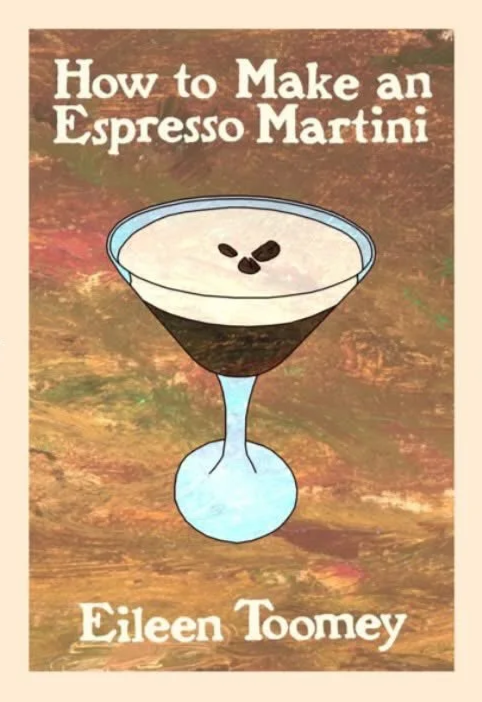
I picked How to Make an Espresso Martini, as the title for the chapbook because it is not only catchy and deceptively fun, but the three coffee beans designating Health, Wealth and Happiness, became the framing device for the whole collection.
4. What are your thoughts on the role of social media
Honestly, I never hated social media, but I didn’t expect it to become part of my poetry life until How to Make an Espresso Martini came out.
After the book was published, Debbie from the gym said, “The cover of your book is so nice. You should start making reels.” Reels are little videos for Instagram that can keep circulating as long as people engage with them. She made one of me reading a poem at Crunch Lunch and shared it on Facebook. The likes came flooding in.
A week later, I went to Cape May with my book club friends. I brought the only three copies I could secure (my neighbor and husband had their copies before me) and my trifold display. We went out on the town — the girls drinking espresso martinis in my honor. I was having fun too, and at the Bee’s Knees Speakeasy I asked every single person at the tables and at the bar to pretend they were reading my book while I took a picture. People were great sports, most of them saying, “This looks so fun!”
“They’re poems,” I’d answer.
The next morning, waiting outside the Mad Batter for breakfast, I hit up groups of strangers again — women in bridal-party sweatshirts, three guys from Philly manspreading on a bench, and finally a couple who started laughing uncomfortably when the gentleman began reading from the book out loud:
I wonder what vehicle
will bring me to my rock bottom altar…
Then he got to:
I know I am too young
to think about dying…
I took the book back before he could read anything else.
My first reel came from that weekend: a full minute of everyone posing with the book set to “Come On Eileen.” It didn’t get many likes, but I started hearing from people.
Then my sister Colleen jumped in and asked everyone she worked with at the YMCA in Schererville, Indiana, to pose with her book. She sent me the pictures, and I made another reel: Going Viral in Schererville, Indiana.
When I asked my gym friends to take pictures reading the book and to give me a quote, every one of them did. That became another early reel: What the Girls from the Gym Think!
Lately I’ve been plunging into old family photographs, pairing them with poems from the chapbook, and making reels that tell little stories. Those have been the most successful of all. Several readers have told me that seeing the reels made them go back and read the poems again.
“They’re like stories,” my brother Bobby texted me.“I can relate.” Just today I got a picture from my friend reading the book next to a pool two towns over, a picture of an old friend who moved to South Carolina and a picture of my brother Bobby’s best friend from Canaryville. So I think social media can be a genuine way to connect people to poetry, especially people who might never go to a reading or pick up a literary journal. If I can borrow one of my hashtags: Poetry for the people.
5. If you were talking with a new writer, what might you tell them about the creation and maintenance of their writing community?
It helped me so much when I started taking classes at Project Write Now, a nonprofit in my town. I had only one or two publications to my credit and was just beginning to take my writing seriously. The program was brand new, and we grew together.
Liz DeBeer, who you interviewed recently and who has published a flash fiction chapbook, is part of that community and we actually did a reading together with another writer, Jenny Morelli, who had published chapbooks, calling ourselves the “Happy Chappies.” Others have gone on to publish memoirs, novels, and poetry collections. We cheer each person on by attending readings, taking classes together, reposting each other's work, and doing whatever we can to support one another.
I've also been lucky enough to attend in-person conferences like Bread Loaf and StoryStudio in Chicago (this August with Lidia Yuknavitch!), which widened my circle well beyond my beloved New Jersey.
If I could tell a new writer one thing, it would be this: don't wait to find your writing community. Workshop! Grow together. Celebrate each other's wins. Buy each other's books. Go to the readings. Writing may happen alone, but a writing life doesn't.
I now run a Lit Mag Submission Club for Project Write Now, helping new writers navigate the process that once intimidated me. You can sign up here: https://pwnwriters.org/course/lit-mag-submission-club/
6. How do literary magazines support your goals as a writer?
From doing snail mail just out of college, when I received the loveliest note from Sharon Olds, to my Submittable account today, submitting to literary magazines has added to my level of confidence and to my actual resume.
My batting average isn’t great but I feel like I’ve hit a couple of homeruns. In September, 2023, I placed second in a Form and Form-Breaking contest judged by Diane Seuss, sponsored by Cleaver Magazine. Later I was nominated for a Pushcart and Best of the Net for that poem. In 2024 I applied for the Bread Loaf Writer’s Conference and got in. The connections there have continued to enhance my writing life.
It’s not easy though. So far this year I’ve sent out fifty submissions and have had just one poem published – but I can feel the energy in the response for certain pieces receiving higher-tiered rejection letters over and over again. I keep tweaking (or not tweaking) and sending those pieces back out. Regardless of acceptance rate, I know they are hitting on a certain level which brings me to how the process helped me to create my chapbook. Most of the poems in “How to Make an Espresso Martini” including the title poem have been rejected, rewritten and workshopped several times so I felt confident sending the manuscript out.
7. What would you do differently when you write your next book?
I want to finish a novel. I have two heavy first drafts in the proverbial drawer, one about a woman murdered in Ireland because her family thought she was a fairy changeling and the other is a Selkie (mythical beings that transform from seals into people) romance also taking place in Ireland. I would focus more narrowly on finishing the draft before I worried about smaller pieces for magazines, pushing to the end.
8. What hobbies/activities/experiences fill your cup of words?
I have lived in New Jersey for almost forty years but my whole family is in Chicago, including my youngest daughter, so Michael and I drive across the Midwest at least once or twice a year. We call ourselves Road Trip Warriors. When we pull up to a hotel, we google “Draft beers near us” and have found some interesting establishments. In the Pittsburgh area they cover every sandwich with slaw, along the shores of Lake Erie, at the Oregon Inn, dusted perch is a big hit with the locals. Fox News is usually on in the background, but so is the jukebox, so we don’t have to listen. In Gatlinburg, TN, one gentleman asked us where we were from and when we answered “New Jersey” he looked us up and down, and then finally said, “well, it’s nice that we are talking.”
9. What question do you wish we would have asked:
What do you hope someone feels after reading How to Make an Espresso Martini?
I hope they feel less alone. The poems are personal, but I don't think they're really just about me. They're about loving difficult people, taking care of ourselves, surviving illness, making mistakes, getting sober, laughing when life is ridiculous, and finding joy anyway. If someone closes the book thinking, Me too, then I've done my job.
10. How can readers find more of your work and where is the best place to order your new book?
Please go to my website: eileentoomey.com and you will find everything: a list of all of my published works with links and a link to order “How to Make an Espresso Martini.” If that feels like too much work, you can order my book directly: https://bottlecap.press/products/howtet.
Immunotherapy/
American Ghazal
Helix
Nivolumab, sold under the brand name Opdivo, is a medication used to treat cancer. It works
We stop for bagels, fill a tank of gas, the highway calls. Jersey to Chicago, the highway calls.
by blocking PD-1 proteins on cancer cells, allowing immune T cells to attack the cancer.
Down the New Jersey Turnpike to the Pennsylvania Turnpike, past Trump signs near Philly.
The drug removes the “cloak of invisibility” from diseased cells so the T cells can “see” them.
Triangle barn in the distance, a gaggle of motorized cranes parked inside a concrete clover.
T cell assassins, radicalized, overtake the patient, his immune system officially out of control.
We smoke legal weed when we pull over with the kids gone and Michael’s stomach in shambles.
Whereas chemotherapy attacks the cancer directly, immunotherapy rallies the patient’s own
The House Committee Investigation findings on CNN radio. Wow. Now we like Liz Cheney?
immune system to fight the disease. Therapy that has gone from experimental to mainstream.
White clouds appear behind the anti-evolution billboard, hang low near Pittsburgh valleys.
Long-term immune-related checkpoint inhibitors can cause a range of long-term side effects:
Dominion machines, Team Normal, drunk Rudy, fake lawyers armed with conspiracy lies.
fibromyalgia, anxiety, nerve pain, thyroiditis, GERD, depression, shadows, wheezing.
We don’t make eye contact with random men wearing camo at the Erie Islands Service Plaza.
Corticosteroids do not impact the efficacy of immunotherapy in metastatic patients, but cause
Hang Mike Pence, “patriots” chanted. For these roads, we laugh, weeds in Hoosier pavement.
changes in weight, mood and behavior resulting in an increase of irritability and aggression
Michael’s neck is thick; his head is swollen. He doesn’t wake up when we pass Notre Dame.
i.e., roid-rage, patient request to reduce intake at this time. List of Medications: Diltiazem
I white-knuckle drive through semi-truck canyons clogging up the Illinois/Indiana border.
ER 240 MG, Olmesartan 40 MG. Albuterol Sulfate HFA, Clonazepam .5, Duloxetine HCL 60 MG,
Hell is between 94 and I-80 but I grew up on the south side of Chicago, and I need my sister today.
Atorvastatin, Calcium carbonate, 1000 MG. Omeprazole, Levothyroxine Sodium, 150 MCG, Lexapro
We listen to our last new John Prine playlist, God rest his soul, road warriors for thirty-four years.
Vitamin B-12. Pepto-Bismol. Patience. Advil. Laughs. Conversation. Empathy. As needed. Excedrin.
I love you. Where’s the lighter? Long ago Eileen married Michael Toomey. The highway calls.
This piece was first published at Cleaver Magazine in September 2023, reprinted with our gratitude.
At the Sip and Save, 1978
The walk-in cooler
is my favorite spot
in the whole liquor store.
Cases of beer stacked
like buildings:
Budweiser, Old Style, Miller,
chimney necks
of Boone’s Farm wine.
I ask my mother
if we are middle class.
She laughs:
Oh no, not even close.
She carries two six packs
of Bud and a pint of Seagrams.
I walk behind her hefting
a two-liter of Seven-Up.
My parents are playing cards
at our house with friends:
Middle class
lives in the suburbs
or neighborhoods like Evergreen Park.
Not here.
Aunt Dorothy and Aunt Rita aren’t middle class?
No! Not even close.
They don’t even have husbands.
She puts the beer and whiskey
on the formica counter
between airplane bottles
of Jim Beam
and plastic lighters.
She asked for Winstons, and yes,
she wants matches.
Middle class people own china
and go on vacation every year.
We swing through
the heavy glass double doors,
the store bell
ringing behind us.
They have cottages
in Michigan and Wisconsin.
The 8 and Halsted bus
pauses at the stop
in front of the Sip and Save
letting off people I don’t know.
Are we poor?
No! We live
paycheck to paycheck
like everyone else.
But we own our house now!
I sing.
Yep.
Why are you asking me this?
She pauses at the car door.
Everything is good
until Daddy goes to the hospital again,
I insist.
She is already behind the wheel
opening her cigarette case,
impatient to get on with the night.
She will let me stir
the onion soup mix
into the sour cream,
squirt Easy Cheese
on a few Ritz crackers.
Tufty grass. Two-flats.
Chain link fences,
peeling paint,
crooked front porches.
Working class means
you pay your bills.
My mom pulls out of the parking lot,
cigarette balanced between her lipsticked lips,
smoke rising from the triangular side window.
You have your fun, though.
This piece was first published at Oyster River Pages in December 2022, reprinted with our gratitude.
Cattle Trucks
I smell the truck
on highway 35
here in New Jersey
before I see it in the right lane.
Memories of being six or eight
and sitting in the back seat
of my mother’s car
spread like a blood stain
on the killing floor.
There were cattle trucks everywhere
feeding the meat packing plants
bordering Canaryville on the Bridgeport side.
They rattled down Halsted,
down 43rd,
sometimes even past
the Baby Park on Union Ave.
If you were stuck behind one
in the backseat of your mother’s car,
you closed your heart
as you listened to the bleating lambs,
the moo-moan of the cows,
a chug rumble of filthy gas.
Even when the car windows were closed
you smelled barnyard
above all the other city smells.
And you were sad
looking in those miserly holes
at the bead of those animal eyes
in the black truck shadows
as they are shipped
slotted in pens
to Moo and Oink,
L & L Bros, and Chiappetti Lamb
for the slaughter:
the burgers,
the bacon,
the chops.
In the back seat
behind your mother
you know you are in the presence of tragedy,
the industry of it,
but you are the top of the food chain.
You got to eat,
she says smoking
cracking the triangle window
always smoking
smoking so much it will kill her.
You’re going to die of something,
at least you’re not going to be a steak.
I wonder what vehicle
will bring me to my rock bottom altar.
I know I am too young
to think about dying,
but when I see those trucks
I do.
This piece was first published at The Museum of Americana in October 2016, reprinted with our gratitude.
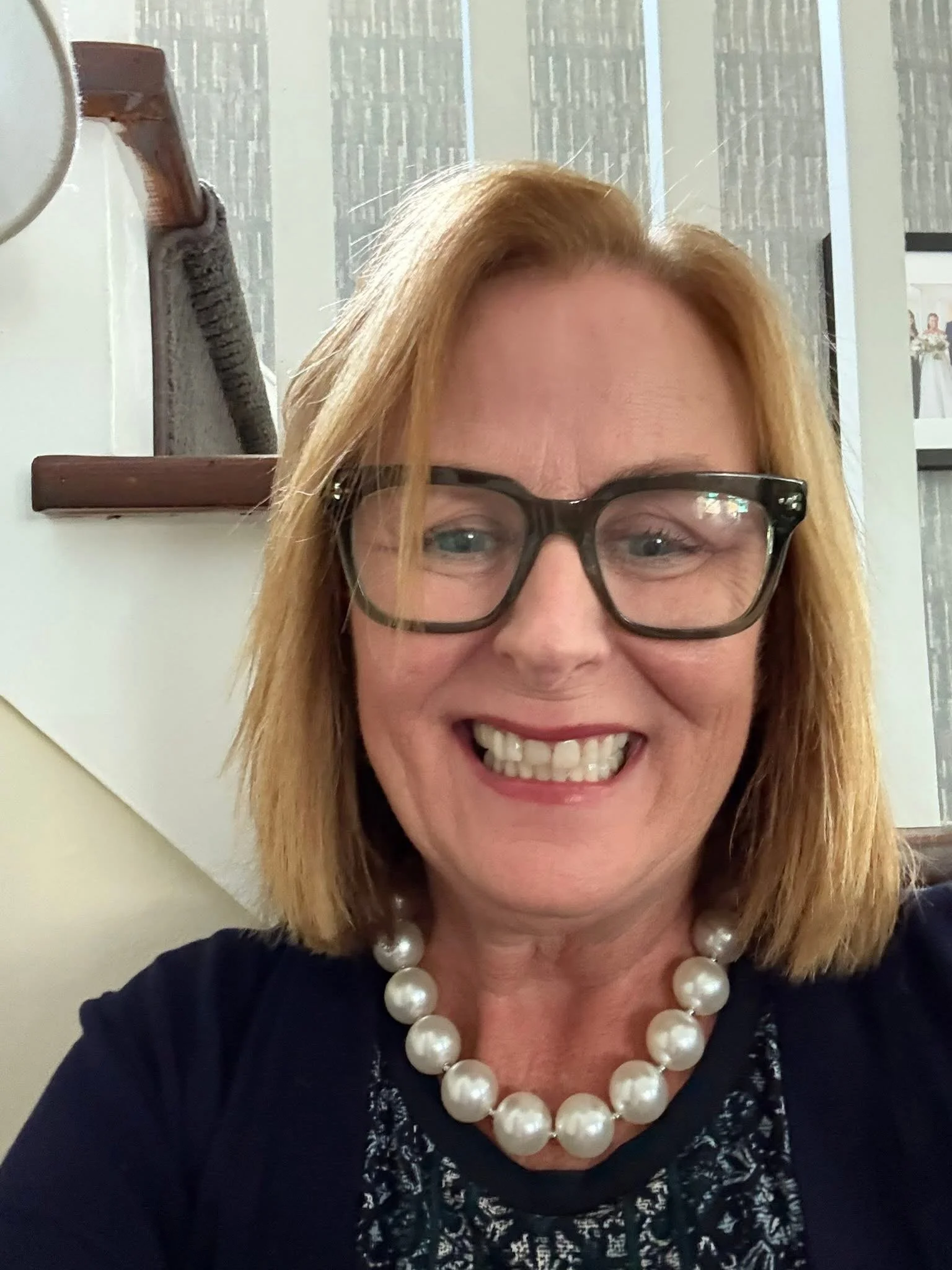
Eileen Toomey is the author of the chapbook How to Make an Espresso Martini (Bottlecap Press, 2026). Her work appears in The Rumpus, Does It Have Pockets, Flash the Court, Contemporary Haibun Online, and elsewhere.
"Immunotherapy/American Ghazal Helix" won second place in Cleaver Magazine's Form and Form-Breaking contest, judged by Diane Seuss, and earned nominations for the Pushcart Prize and Best of the Net. She teaches at Project Write Now in Red Bank, NJ. You can find links to her publications and social media accounts at Eileentoomey.com.